DEATH OF A NIGHTINGALE
A play ... but it reads like a novel
A PLAY ON WORDS Compelling, controversial and confrontational, it is a brilliant addition to the inclusion or, as some argue, the illusion debate. Philosophical, political, cultural, ethical, yet human and humane in content, it is written with insight into the conflicts, traumas, joy and concerns that are daily events in the life of any school.
Set against the proposal to close a successful special school on the basis of an inclusive educational agenda, major issues are explored and exposed. Characters present a variety of arguments in a thought-provoking presentation of some contentious matters.
Len Parkyn - The Teacher - October 2008
There are three themes to this play:
1 Westborough Local Authority attempts to close Brighouse School, a school for physically disabled children with an associated learning difficulty in accordance with a policy of Inclusion with national and international endorsement, but against the wishes of parents, children, staff and governors.
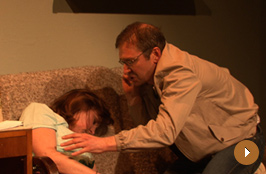
2 Pressure on the head teacher to support this against her better judgment leading her to attempt suicide. She said that she felt like "a little lump of plasticine in the hands of the LEA."
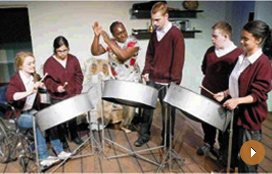
3 A music lesson, where music has a special value to children with special needs - can “spirituality” in music reconcile different faiths that believe in a universal creator so that each one can respect the others, while atheists and agnostics can rejoice in the flourishing of the human spirit? This is one of the most important issues of our times.
... and now you can download a version adapted for the stage
____________________________________________________________________________________________
WHY I HOPE YOU WILL READ THIS BOOK AND NOT JUST BROWSE
And why I wrote it in the first place
This is how I end the Prologue.
"A little story. Two seriously ill patients go to see a doctor. He examines the first. 'Oh dear' he says, 'I am most terribly sorry. I cannot do anything here.' He then sees the second. 'Oh dear, oh dear, oh dear. I must do something here.' ......See the whole as one picture, but see it as a fragment of a very large canvas."
Where did it begin for me? Why I felt I had to do something.
I was chair of governors of a special school for over thirteen years. This gave me an uncomfortable insight into the handling of special educational needs, into the workings of government and into the thought processes of the Law and Academia.
All of this provoked me to think about the world I lived in and, in the words of T.S. Elliot, "to arrive where I started and know the place for the first time."
I also met some wonderful people, especially teachers, carers, parents, other governors volunteering their time and, of course, the children themselves. An imaginary story, a work of fiction, brought these two things together.
I have written Death of a Nightingale as a participant and as an observer. By being both I feel that I am more than both, and I understand more than I did twenty years ago before it all began.
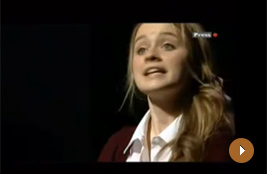
So I tell the story of a head teacher of a special school who tries to take her own life. This did not happen. But it could. My characters are all fictitious, but it is a real life drama. And I tell it in the form of a play that you can read - in the time that you could watch it Maybe one day you will go to a theatre and see it peformed.
Salamanca 1994 - Inclusion or Disillusion?
The play opens up issues that some might regard as settled. It tries to free-up constructive thought. It seeks feedback. And I hope that it will also help to raise money to fund holidays for children with special needs. Do read it, and join in this endeavour.
Let me explain.
In June 1994, under the auspices of UNESCO, more than 300 delegates came together representing 92 governments and 25 international organisations in a Worldwide Conference at Salamanca, S p a i n, to set out principles, policy and practice in relation to special educational needs and, amongst other things, stated “those with special educational needs must have access to regular schools…. such schools provide effective education to the majority of children and improve efficiency with cost-effectiveness.”
This is the noble dream, but is it now a nightmare for some children?
It underpinned Inclusion policies in the UK, in the USA and elsewhere, closing many special schools in the process.
We are now 14 years on. How is it working out worldwide?
Baroness Warnock, author of the 1978 Warnock Report on Special Education in England, Scotland and Wales, wrote recently: ‘possibly the most disastrous legacy of the 1978 report was the concept of inclusion.’
1. Are individual special needs being identified? Do they need to be? And are they being met?
2. How far does bullying get in the way?
3. How is the policy being managed at the local and national level? Is it cost-effective?
4. How do the Special Schools that remain fit in?
5. Why do parents continue to vote against it? (See recent petitions.www.southtyneside.info/senreport.)
If it is right to ask these questions, then there is work to be done. As Eileen Winterton, the chair of governors, says in the play, "You cannot turn the clock back. You are not looking for an old clock. You are looking for a new compass." and "You can care too much. You can you know, if that blinds you to uncomfortable reality."
What then should follow Salamanca? Think about it as you read this.
It is the drama of the real world, where people try hard to live out their dreams
For a start you will see that it would be much better if everyone talked about children with very different special educational needs, because that is the way it is. The needs are not all the same. And children are not all the same either. For some - not all - these dreams turn into a living nightmare, and one you can't wake up from.
When you reach the end of the play, reflect for a moment on just how many different kinds of need there are – physical disabilities and psychological ones and, separate from that, but often in addition to that, learning difficulties as well, some designated profound. This is explained in the Author's note.
You will understand that they all need to be addressed individually, even though some opinions suggest otherwise, saying that they can be addressed collectively, that what is good for one will be good for all.
"Care, and take care" is its underlying message. "A helping hand" is as important as "an open door".
In many cases these children need time and patience. This can sometimes be a scarce resource. And they need dedicated teachers, carers, school nurses, physio's, speech and language therapists and others who have the expertise to give them the one chance that they have to find their place in the world. This is what a good special school can provide, if a mainstream school finds it difficult. Hence the importance of choice.
Read the book, not just this website, and you will understand why there is no cheap option, why there can be no quick fix and, also, why I would like to bury six feet down the word "segregation" in relation to special schools, and the stigma that this word attaches to them. They have a worthy part to play in the scheme of things. They can do without the smear that that word implies.
So here is another thing to reflect upon when you reach the end of the play. In fairness to everyone, it is just as important for the system to be sensitive to the individual needs of children as it is to plan for a more equal, more harmonious society. With proper accounting it should cost no more.
- This is the stuff of drama - enjoy the virtual reality of the play
- Go to the Shopping Cart, and buy the book today - new edition published 4 November 2008
- And now "THE NEEDLES IN MY HAYSTACK", Browse Blog for the thoughts behind the book and an opportunity to give yours.
- Please copy www.deathofanightingale.com to all those in your address book who are likely to be interested.
Alan Share
PS The ostrich that buries its head in the sand should not be totally surprised if it is run over by a double decker bus.
___________________________________________________________________________________________
Visit http://news.bbc.co.uk/1/hi/education/7530895.stm and read at the end of the article the unpleasant experiences of parents of children with special needs in the UK today.
____________________________________________________________________________________________
Visit http://news.bbc.co.uk/1/hi/education/7543774.stm. and read who are the "low achieving pupils"in the UK. See the problem. Buy the book, and you will understand it.
____________________________________________________________________
Visit http://news.bbc.co.uk/1/hi/education/8415528.stm DECEMBER 16 2009 Click "More like this" CHILDREN SUFFERING IN MAINSTREAM SCHOOLS
___________________________________________________________________
Visit The Bullying of Children with Learning Disabilities- ENABLE Scotland 2007
Our work with our Young People’s Self Advocacy Groups has revealed that bullying is also an important issue for children and young people with learning disabilities. We joined forces with Mencap to undertake UK wide research to find out the scale and nature of the problem and most importantly to tell us more about how to stop it
We knew that bullying of children with learning disabilities existed. We knew that it is widespread and has a significant effect on children’s lives. However, we were shocked by the results that the survey revealed. We could not have predicted the scale of the problem...
.... 93% of children with learning disabilities have been bullied, 46% ... physically assaulted, half have been bullied persistently for more than two years.
Can you really ignore all this?